
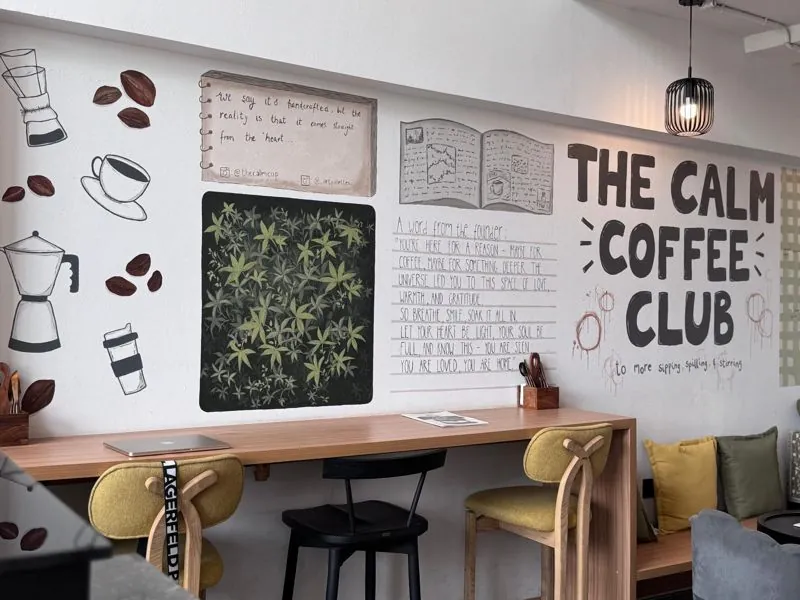
Gurgaon is a good city for cafés: offices, young families, remote workers and plenty of people who want somewhere to sit that isn't home or work. It's also a city where a café can be loved and still lose money. Ours was rated 4.9★ across 383 Google reviews and closed after twelve months, because rent took more than half of what it earned.
Here are the steps to open a café in Gurgaon — and, for each one, why it matters. The how is easy to find. The why is what keeps a café open.
1. Decide what your café is for
"Good coffee" isn't a reason to choose you; every café says it. Pick the one thing people will come back for: a calm place to work, a family stop after school, a quick office-hours counter, a weekend hangout. Why it matters: it decides your location, menu, seating and hours. Get this wrong and every later decision pulls in a different direction.
2. Do the numbers before you look at spaces
Estimate realistic daily guests, your average bill and the days you'll open. That gives you a monthly revenue range. Then work out what rent that revenue can carry — most operators aim for roughly 15–20% of revenue or less. Why it matters: the space you fall in love with will try to make this decision for you. Here's what happened when ours did.
3. Choose the location on footfall you've counted yourself
Stand outside shortlisted sites in the morning, afternoon and evening, on a weekday and a weekend. Count people and note who they are. Check visibility, parking and which side of the road people actually walk on. Why it matters: busy isn't the same as right. The people walking past have to be the people your café is for.
Don't only look at the high street. Society clubhouses, office buildings and co-working spaces already have people in them, often with far lower rent.
4. Read the lease like it's the business plan
Ask for rent-free months during fit-out, and check the yearly escalation, lock-in period and security deposit. Confirm the property is allowed to run a food business, and has the power load and water a kitchen needs. Why it matters: a lock-in and an escalation clause decide how long you're stuck if the numbers don't work.
5. Start the licences early
Most cafés need an FSSAI registration or licence, GST registration, shops and establishments registration, and a trade or health licence from the municipal corporation. Depending on your space you may also need a fire safety NOC, signage permission and music licences. Why it matters: some approvals take weeks and a few need your fit-out finished first — paperwork shouldn't set your opening date. Rules change, so confirm the current list with the authorities or a consultant.
6. Fit out for speed and for one corner people remember
Plan the counter and kitchen around your busiest hour, then design one corner guests will want to come back to — ours was a reading corner. Why it matters: photos bring a first visit; comfort and fast service bring the second.
7. Keep the menu short, and price for margin
Start with 12–15 items you can make perfectly at rush hour. Cost every dish — ingredients, packaging, wastage — before you set prices. Why it matters: every extra item adds stock, waste and waiting time, and a popular dish priced too low loses money every time it sells.
8. Hire for the day you're not there
Write down how to open, close, make every drink and handle a complaint. Train before opening, not during. Why it matters: if the café only works when you're behind the counter, you've bought yourself a job, not a business.
9. Launch by getting found, not by throwing a party
Set up your Google Business Profile with real photos and correct hours before you open, then ask every guest for a review. That's how a small café gets found on Google Maps — it took ours to 383 reviews in a year. Why it matters: a launch party brings one busy evening; reviews bring the people nearby, every day.
10. Decide on Swiggy and Zomato with a calculator
Work out what's left from one order after commission, GST on that commission, discounts and packaging. Why it matters: delivery can add orders without adding profit. For us, commissions and discounts ate into the margin more than we expected.
Before you begin
None of these steps are about cups, colours or the coffee machine. Those are the fun parts — and they're easier to get right once the numbers, the location and the lease are sound. Start there. And if you'd like someone to walk through the why with you, that's exactly what our café consultancy does.
Also read: Before You Open a Café: 10 Questions We Wish We'd Asked.